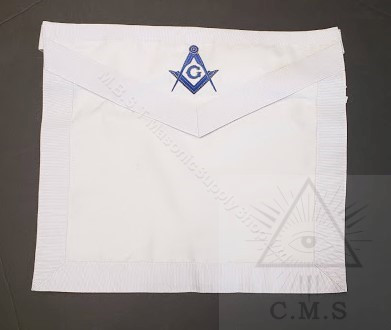
Masonic regalia often turns up when families clear a house. The objects can be beautiful and puzzling. Here's how to start identifying what you've found, and what you can do with it.
Aprons
- A plain white apron, often lambskin, may be a Craft apron from a jurisdiction where all degrees wear white, or a presentation apron. Many Masons were buried with theirs, so finding one is a little unusual.
- A white apron with blue borders and rosettes is typical of a Master Mason in many English-style and Canadian jurisdictions.
- Levels (shapes like an upside-down T) instead of rosettes usually indicate a Past Master.
- Heavy gold lace and a dark blue or purple border suggest Grand Lodge or provincial rank.
- Red, black, white or crimson aprons with other symbols may belong to appendant bodies such as the Royal Arch or Scottish Rite.
Jewels
Breast jewels are hung from ribbons and often carry engraving on the back. Look for:
- A lodge name and number, which is the single most useful clue for genealogy.
- Dates, often of installation as Master or of an anniversary.
- The emblem: a square, a level, a compasses on an arc, a keystone, a cross or a double-headed eagle each points to a different office or body.
- A Lewis jewel, with bars for father and son, records several generations of a family's membership in one object.
Certificates
A Masonic certificate is usually the best single document you'll find. It normally states the lodge, the Grand Lodge and the dates. Photograph it before handling it further, and keep it out of direct sunlight.
Fezzes and other hats
A red fez with a tassel and Temple name belonged to a Shriner. Other hats, including chapeaux and caps, belong to various appendant bodies.
Who can tell you more?
- The local lodge your relative belonged to, if it still exists. Lodges are usually pleased to hear from families.
- The Grand Lodge library for that state, province or country.
- Masonic museums, some of which run identification services or online guides.
What to do with it now
You have several good options:
- Keep it in the family, especially if a relative is, or might become, a Mason.
- Return it to the lodge, which may display it or present it to a new member.
- Donate it to a Masonic museum or library if it has historical interest.
Whatever you decide, store it well: flat, dry, out of sunlight and wrapped in acid-free tissue. A purpose-made apron case is an easy way to protect an apron.
A note on value
Old regalia is often more valuable to a family or a lodge than on the open market. Before selling, consider whether a Brother or a lodge would treasure it.